

stanv.over-blog.com/
24 Janvier 2021

You can use Sidecar wired or wirelessly, but if you want to switch between them, you have to disconnect and re-connect using the AirPlay menu. Apple says it should work wirelessly as long as the. Which is why I recently found myself in Cambridge, watching a classroom of Year 5 girls – 9-10 year-olds – practising their programming skills on iPad apps like Hopscotch, Move the Turtle.
The merit in all things consists in the difficulty.
– Aramis
This is a story about how I experimented with using an iPad Air 2 to write code, what worked and what didn't, and where I ended up.
Updates:
In 2019 I reevaluated coding on iOS with Coding on an iPad Pro in 2019.
I also continued my quest in Can you Write Code on a Chromebook? and Using Windows 10 and the Surface Book 2 for Web Development.
Why did I head down this ludicrous path? That's a long story. You can read it at My Ideal Software Development Environment.
Without going into too much detail, let's say that I became obsessed with creating an ultralight, thin-client computing environment, and few computers on the market seemed to fit my requirements.
However, my two-year-old iPad Air 2 was about the right size and weight. The idea that I could use iOS for work seemed laughable, but I figured that the iPad could stand in for the device I would one day buy. And of course, most of the things I did were already cloud-hosted, with native and web applications that ran on phones, tablets, and laptops.
Despite iOS's limitations, it is very much oriented toward thin-client uses:
So I began the experiment.

The most important part of my ideal development environment was that code and dependent programs would exist off of my device. Local caching would keep me going if I went offline temporarily. The environment should provide roughly the same level of intelligence that I expect from PC and Mac IDEs. Call of duty do.
That was already a tall order, and I had other requirements that I hoped to achieve eventually. Accepting that it wouldn't be perfect, I decided that I could make compromises if they got me close to my ideal.
There are several types of programs I write, some more frequently than others, that my development environment needed to satisfy:
None of these types of programs can be written directly on the iPad, using iOS programs, for a few reasons:
Accepting these constraints for the purpose of the experiment, I dug into the concept of hosting my code and programs on a cloud server, with a fast, native text editor running on iOS. For the rare times I developed iOS, macOS, and Android apps, I would have to figure out some way to connect the iPad to a remote graphical desktop.
However, I quickly found that no professional-grade editor existed for iOS. Apps like Coda, Buffer, Codeanywhere, and the iOS Vim port all failed to work nearly as well as well as desktop editors like Vim, Emacs, and JetBrains IDEs.
As I tried and failed to get a good editor setup in iOS, I decided there was only one way to achieve a real development environment on the iPad: return to Vim.
If I couldn't run a good editor natively on the iPad, with my code on a remote server, then I'd have to run the editor itself on a remote server. That left either a remote desktop/VNC connection to a server running a graphical editor, or using a shell session over SSH.
Even on a fast LAN connection, in my experiments VNC was choppy and weird. I couldn't imagine it working on coffee shop internet. A terminal session, on the other hand, only had to send minimal data: text.
Two powerful text editors exist, designed for exactly the constraints imposed by a terminal session: Emacs and Vim. I was already familiar with Vim and comfortable with its modal editing paradigm, so I decided to shift all my development back to it after a several year hiatus.
Still using my laptop at this point, I made a few updates to my old Vim configuration. I updated to the latest version of Neovim and configured vim-test to run tests in a terminal split. This is pretty great, as it gives you access to debuggers like pry running alongside your code in a Vim buffer. Then I freshened up my tmux configuration and began writing code in Neovim within a tmux window, instead of my IDE.
In a week or two, I had fully reacclimated to Vim and was pretty happy, so I took the next step: finding a place to run Vim that wasn't on my computer.
Digital Ocean was my first choice and made getting started easy. The web site has great UI/UX, and support is included.
Pricing on VMs was competitive with other providers like Linode and included features like backups and metrics.
I also experimented with GCP because the flexibility was attractive.
With GCP, I could pay for the compute nodes (to use Google Cloud Platform terminology) that run my dev environment separately from the disk space. For a couple of days I might run with one CPU and 4 GB of RAM, and then if I needed to temporarily, I could scale the compute node up – perhaps to run a graphical desktop and work on an Android app. Meanwhile, my network traffic would always be low compared to something like a busy website, so no need to pay for traffic I won't use!
Second, I could snapshot my entire development environment automatically and keep it backed up. I could keep a base image and clone that into new project-specific environments if needed. (Both of these features were also possible with Digital Ocean).
Best of all, when I'm not using the machine, I could power down the compute node portion and stop paying for it!
All of this looked possible with Google Cloud Platform, and when I signed up, the free trial included enough credits to run a medium-powered machine 24/7 for an entire year.
It took some time to set up my disk, a compute node, get some projects set up, and script the process. In the meantime, I opened up the SSH port on my router and macOS firewall on my Macbook Pro, so I could try out an SSH-based working environment immediately, by SSHing from my iPad to the Macbook Pro.
Once I had a development environment I could SSH into, I was ready to get my iPad set up.
This was not quite as magical an experience as using Google Cloud Platform. However, keyboard control of iOS and many apps had improved since the last time I tried using a Bluetooth keyboard with an iPad.
I dug out my old Microsoft Universal Keyboard, which was decent but flawed due to the position of some keys and its small size. Still, it worked and was pretty light. After trial and effort I wound up with the following apps:
Blink, a Mosh and SSH terminal that can remap the Capslock key to Escape and Option to Control – changes that, unlike macOS, iOS can't do but that I need for using Vim
Mosh on the server and Mosh connections with Blink; Mosh is an SSH utility that makes sessions work very well over unstable network connections, like those found in the coffee shops I enjoy
The built-in Mail and Calendar apps because they had the best keyboard support (surprisingly, all of Google's apps had poor keyboard support)
A crazy browser called iCab, which lets you control almost every feature with configurable keyboard shortcuts – all it was missing was a Vimium-style feature to open links with a keyboard!
Dropbox as my filesystem because it was so well-integrated in other iOS apps, and because it supported headless Linux installs, giving me full access to my iOS files via a Linux terminal
You'll get an occasional email when I'm excited enough about a technology to write about it.
I loved that my graphical environment stayed in sync across both my phone and the iPad, which felt really cool. iOS, though weird in so many ways, came to feel futuristic and made my Mac desktop feel stale whenever I had to use it.
I loved that it was fun! I can't really explain why it was fun. It could have been purely the extra difficulty that made it more fun.
I loved setting up the Workflow app to remote-control my development environment from my phone or iPad via SSH commands tied to buttons in the app. A new release of Workflow broke SSH commands the day after I got mine working, but the feature was cool while it lasted.
I enjoyed code reviews a lot more! When I did code reviews, I would detach the keyboard and use the iPad as a tablet. I read pull requests from a comfortable chair, holding the iPad with one hand and taking notes with the other, and then I would snap the iPad back into the keyboard to write up my comments.
I loved taking a three-mile hike around Oak's Bottom Wildlife Preserve with the iPad on my shoulder and barely feeling it, then working for a couple of hours in a beautiful park, tethered to my phone connection.
Battery life was good. Not great, but way better than my Mac.
Ultimately, using iOS to write code became an endurance test: just how many limitations could I endure?
There were so many they sometimes took my breath away, but here are the deal-breakers:
There is no way to access Developer Mode on any iOS web browser. iCab has Firebug Lite built in, which is close enough to scrape by, but I mean, this makes web development pretty difficult.
iOS 10 exhibited frequent Bluetooth keyboard glitches with three different keyboards. The Command-tab shortcut would often deliver me to the wrong app, as if someone had stored an index number into an array that was being mutated and never updated the index. Meanwhile, all three keyboards would occasionally stop working and have to be reset. I found many of these issues already reported by customers months and years ago, and yet they were still around. I can't imagine how Apple can sell 'Pro' iPads when the OS has so many flaws in external keyboard support!
You can connect a USB keyboard to an iPad via a Lightning-to-USB adapter, but there is no good way to connect an iPad to an external monitor. So this is not a device that can scale up to a desktop workstation. There are ways to output your iPad display to a monitor screen, at a bad resolution and with black bars along the sides, but A) this is different from real external monitor support and B) every variation of this experience that I tried was unacceptable.
Touching a screen is enjoyable when I'm doing tablet tasks like reading, but if the iPad is connected to a keyboard, I do not want to have to touch the screen for every task. Being required to reach up and touch a screen repeatedly for several hours sucks the fun out of iOS. Touch is a pleasing interface while the iPad is in tablet mode, but when connected to a keyboard, touch can't replace a mouse or trackpad.
There are no truly reliable, full-featured SSH clients, though there are many expensive ones. Blink, the best I could find, constantly broke in various ways and required me to close out my session and establish a new one to fix display problems and frozen keyboard input. For something that itself is a compromise to replace the full-featured native text editors that don't exist on iOS, unreliable SSH apps are a deal-breaker. Transfer android to pc wireless.
If you want to use custom fonts in your terminal (and thus Vim, in my case), your SSH app has to have this feature built in – and many don't.
iOS doesn't allow you to remap keyboard keys like Caps Lock and Control globally, so individual apps have to build that feature in, and almost none do.
You can't override default applications like the Safari browser.
It is pretty well established that apps can't let the user modify how they operate, i.e. by exposing a x plugin API.
Apple maintains total control on what apps you can install on the device; they could revoke an app you rely on at any time, for any reason.
So many more…
To me, the most surprising part of the experiment was that using Vim on a remote server was acceptable – even great. I could start a test run that was configured to push a notification to my phone when it was finished, walk to the coffee shop, and by the time I ordered my drink, get pinged that the tests passed or failed. Cool! Video editor similar to final cut pro.
If I were to go back to using a Mac primarily, which I haven't yet, I would still use Vim on a remote server. I set up a decent ctags workflow that jumped to symbols with less accuracy than an Intellij editor, but was still better than nothing. Linters gave me pretty good real-time feedback about my code in the languages I used.
Vim is great at editing text, and using it instead of a Vim emulator in an IDE feels like coming home. I can appreciate the Unix philosophy of composing an environment from individual, specialized tools, even if the downside is that nothing feels truly cohesive.
Ultimately, after a few weeks, I stopped using an iPad as my primary device. The limitations were starting to get to me, but what forced me to stop was that my hands ached. Those tiny Bluetooth keyboards hurt to type on after a while!
However, I consider the experiment a success: I found out that I was really happy with a light, thin client device that could act like both a laptop and a tablet.
So I looked around for other devices that I could write code on that were similar. There were only two or three on the market:
Every other hybrid laptop on the market weighs more than I want or is somehow compromised. Meanwhile, Apple maintains its lust for OS and device purity, desiring that I pay thousands of dollars for a phone, tablet, computer, watch, and whatever else they can design, with three different OSes, rather than building practical, multi-purpose systems.
Ultimately, I grabbed a Chromebook Plus for $417 on an open-box special at Best Buy. So, let me give you a preview of the writeup of my next experiment: Can You Code on a Chromebook?
Here are some salient facts about the Samsung Chromebook Plus that I've been using the past couple of weeks:
That's all until next time, when I return with Can You Code on a Chromebook?
A month ago, I wrote a list of gadgets I love. In it, I mentioned that I gave my old iPad to my wife. I didn't use it enough to justify keeping it for myself. Yet, I conceded the appeal of the newer iPads:
I'm not saying never again to owning an iPad. The newer, fancy models with the pencil cast a certain spell on me.
Still, I reached a point where gadgets are only added to my collection if they get used. So I'll only get an iPad if I can find a workflow that makes it a necessity.
In doing so, I fear a seed was planted. I started asking myself what said workflow might look like.
iPads tend to be great consumption devices. They are lightweight and easy to transport. Fast, thanks to great specs and tight integration with the operating system. Their battery life lasts for most of the day. If you are watching videos, casual browsing, or playing games they are quite convenient.
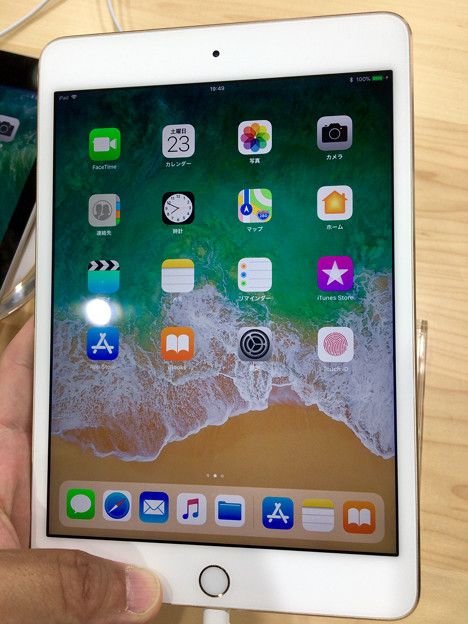
I don't hate consumption, but I'm trying to focus more on production than consumption in my life. So the iPad doesn't hold great appeal when solely considered as a consumption device.
In recent times, I have seen people use them to be more productive, however. Doctors and medical students appear to be quite fond of domain-specific apps as well as its note-taking capabilities. Digital artists create great paintings and drawings on them. Musicians and even photographers/videographers are increasingly using the iPad, particularly the Pro line, on the go.
Could the iPad be a great option for programming as well?
Before we discuss how one might configure an iPad for programming, I'd like to point out that my primary use would be reading technical PDFs, annotating them, and taking notes. If you are only interested in programming, laptops are a superior choice.
Still, you are there sitting at the library or a coffee shop. You're reading a programming book, jotting down notes. It's only natural to want to write code to validate and experiment with what you're learning.
We know from neuroscience studies that the act of taking notes by hand is superior to typing them when it comes to retaining the information. For programming related material, however, I'd say that writing actual code is just as important.
You could bring both a laptop and an iPad but it becomes quite inconvenient at that point.
So for me, the ideal scenario would be an iPad that allows me to read technical books, annotate them/take notes, and program on it.
It already excels at the first two tasks, but can the iPad work for programming? The screen, in landscape mode, is certainly big enough. If you opt for the 12.9″ model, it's essentially no different than my current MacBook Pro. Spec-wise, it might even be as fast, if not faster.
So it's really a matter of software. These babies should be called iFortKnox. They are quite locked down.
If you search for them, you'll find the occasional IDE for iOS. Pythonista for iOS, for example, will mostly work if you're writing Python scripts.
Unfortunately, there isn't an equivalent for Elixir and Phoenix, which I tend to favor these days. Plus, I like to use Git as a mechanism to share code between different laptops.
VNC is not a great option either, in my experience. You'll face quite a bit of lag and the smaller screen of the iPad doesn't lend itself too well to showing a whole computer desktop.
It seems to me that the best approach is to have the development environment on a remote machine and use the iPad as a client.
Amusingly, dedicated services like C9 by Amazon do not support mobile browsers that well. Though, with the upcoming iPad OS defaulting Safari to a full browser, it's possible that these will become a viable option.
Based on my research, the most promising alternative is running a cheap remote box on DigitalOcean or similar provider, and connecting via a mosh-shell like Blink Shell. That appears to work really well even with spotty connections.
It would mean using a terminal-based editor. It's not for everybody, but even though I tend to use Visual Studio Code these days, I would have zero problems with using Vim for this purpose. (Hello Vim, my old friend, I've come to type with you again.)
This caveat aside, I really don't see a downside to this workflow. I get all the benefits the iPad brings plus the ability to actually do real programming (with a cover keyboard, of course).
The new iPad Pros are rumored to come out soon. They might be announced in less than two weeks. So I'm going to sit tight on this one but I'm eagerly waiting.
What about you? Do you have an iPad? Do you use it for programming? Is your workflow different than the one I propose here? Let me know in the comments below.
Subscribe to my mailing list to receive similar updates about programming.
Thank you for subscribing. Please check your email to confirm your subscription.
Something went wrong.
I respect your privacy and take protecting it seriously. Feel free to review my privacy policy page for further details.
iTunes comes on your iPad, and it helps organize media — music, movies, audiobooks, podcasts, and such. Install iTunes on your computer, and use it to sync (transfer) downloaded content to your iPad. You can also use iTunes to sync your contact data, appointments, e-mail messages, notes, photos, bookmarks, and computer apps on your computer with your iPad.
Setup the iTunes app on your computer so that it syncs only the stuff you want transferred from your computer to your iPad.
On a Windows computer, choose Start→All Programs→iTunes; on a Mac, click the iTunes icon in the Dock. iTunes opens and your iPad is listed in the Devices section of the Source List on the left.
A series of tabs displays. The settings on each tab allow you to select the kind of content you want to download and whether you want to download it automatically (when you sync) or manually.
On the Summary tab, you can select when updates to the iPad software occur, and set general syncing options. On the Info tab, select whether to sync Contacts, Calendars, E-mail, Bookmarks, or Notes. On the Apps tab, select which computer applications want synched to your iPad.
The Music tab controls which music is synched. The Movies, TV Shows, Podcasts, and Books tabs work similarly. On the Photos tab, you can specify which photo folders are synched to your iPad.
You'll find the Sync button in the bottom right corner of the window. When you click it, the specified files are synched (transferred) from your computer to the iPad.


/image%2F6307157%2F20210327%2Fob_def259_mp4-to-webm-handbrake.jpeg)
/image%2F6307157%2F20210327%2Fob_5cda5d_convert-to-prores-422-mpeg-streamclip.png)
/image%2F6307157%2F20210327%2Fob_bdc60a_legacy-of-the-void-hearthstone.jpeg)
/image%2F6307157%2F20210327%2Fob_59116e_voice-mod-league-of-legends.jpeg)